


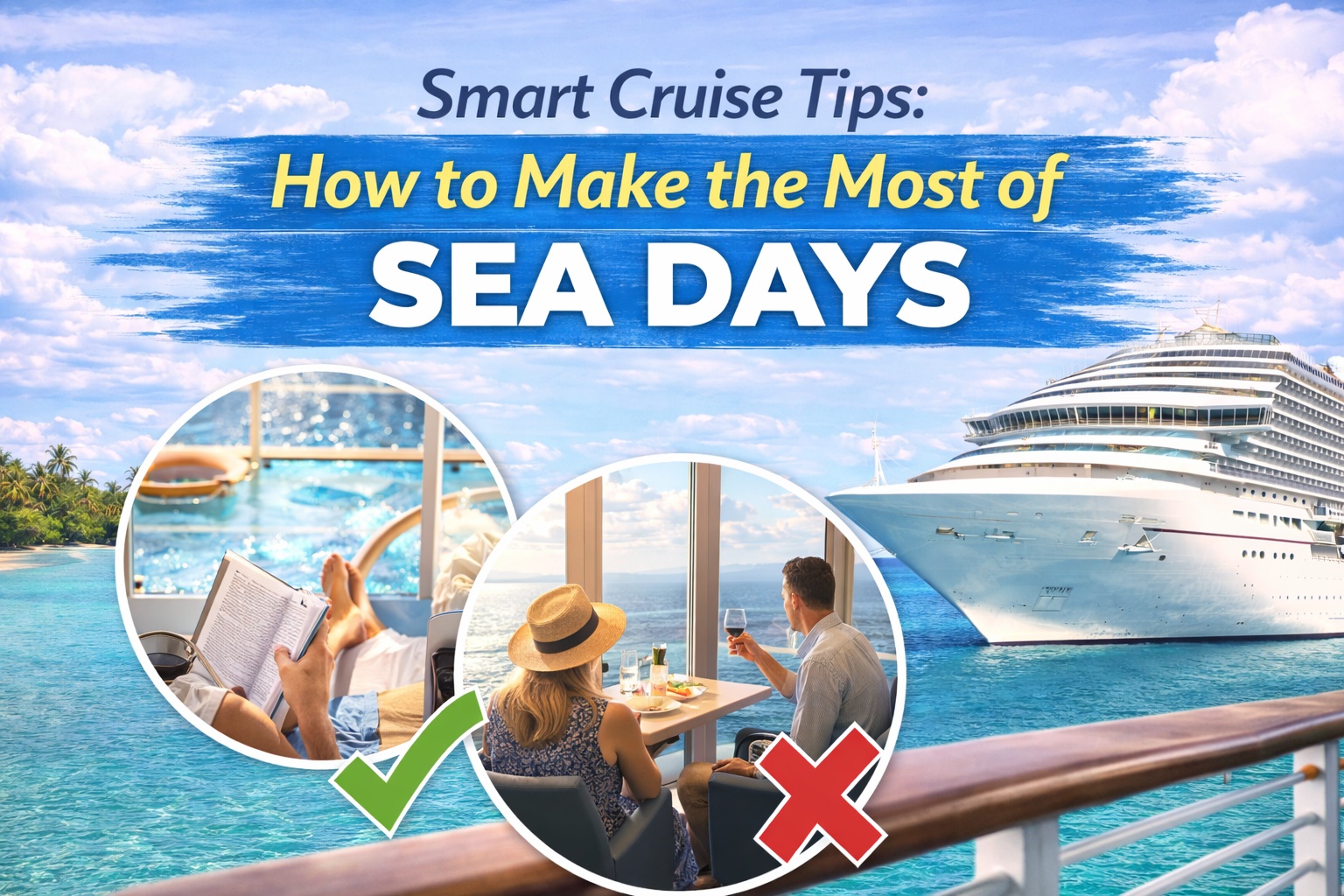
Smart Cruise Tips: How to Make the Most of Sea Days
Sea days are where the cruise experience really happens.
They are also where a lot of people get it wrong.
Without a plan, sea days can feel crowded, unstructured, and less enjoyable than expected. With the right approach, they become some of the best parts of the trip.
The difference comes down to timing, awareness, and a few simple decisions that shape how your day unfolds.
Start Early or Accept the Crowds
Sea days follow predictable patterns.
Late mornings and early afternoons are the busiest times on the ship. Pools are full, buffets are crowded, and popular areas feel congested.
If you want a quieter experience, start early.
Early mornings offer:
- Empty decks
- Shorter lines
- More space in shared areas
Even an hour or two ahead of the main crowd makes a noticeable difference.
If you prefer a slower start, just understand that you are trading that for a busier environment later in the day.
The Pool Deck Is Not the Only Option
The pool deck is where most people naturally go.
It is also where most of the congestion happens.
Every ship has alternative spaces that are quieter and often more enjoyable:
- Observation lounges
- Upper deck seating areas
- Adult-only sections
- Less obvious outdoor spaces
These areas are rarely full, especially earlier in the day.
Taking a few minutes to explore the ship on the first day helps you find these spots before everyone else does.
Timing Matters for Food
Dining patterns on sea days are predictable.
Buffets and casual venues peak at standard meal times. That is when lines are longest and seating is hardest to find.
Shifting your schedule slightly improves the experience without changing anything else.
Eating earlier or later than the main rush:
- Reduces wait times
- Improves seating options
- Makes the entire process feel more relaxed
This applies across all dining venues, not just the buffet.
Pick a Few Anchors, Not Everything
Cruise ships offer a long list of activities on sea days.
Trying to do everything usually leads to a day that feels rushed and fragmented.
A better approach is to choose one or two anchor activities and build around them.
That might be:
- A show
- A scheduled activity
- A meal reservation
Everything else can stay flexible.
This keeps the day structured without feeling overplanned.
Use Midday for Downtime
Sea days are long.
Trying to stay active from morning through evening usually leads to fatigue by the end of the trip.
Midday is a good time to reset.
That might mean:
- Returning to your cabin
- Spending time on your balcony
- Finding a quiet indoor space
Even a short break can make the rest of the day feel more enjoyable.
Avoid the Peak Movement Times
Certain times of day create natural congestion.
Right before dinner, after shows, and during major events, the ship becomes more crowded in hallways and common areas.
If you are aware of these patterns, you can work around them.
A slight adjustment in timing, even by 15 to 20 minutes, often makes movement around the ship much easier.
Sea Days Are the Best Time to Explore the Ship
Ports tend to limit how much time you spend onboard.
Sea days are when you can actually experience the ship itself.
Take the time to:
- Walk through different decks
- Try new venues
- Understand the layout
Many people leave a cruise without ever fully exploring what the ship offers.
Sea days give you the opportunity to change that.
Balance Activity and Flexibility
The best sea days are not the busiest ones.
They are the ones that feel balanced.
Too much structure makes the day feel rigid. Too little structure makes it feel unproductive.
A mix of:
- Planned activities
- Open time
- Intentional breaks
creates a much better experience.
Small Adjustments, Better Experience
Sea days do not require a complicated strategy.
Most of the improvement comes from small adjustments:
- Starting earlier
- Avoiding peak times
- Exploring beyond obvious areas
- Building in downtime
These changes are simple, but they have a noticeable impact.
Final Thought
Sea days are where cruising shifts from transportation to experience.
Handled well, they become some of the most enjoyable parts of the trip.
Handled poorly, they can feel crowded and underwhelming.
The difference is not the ship. It is how you approach the day.
And with a little awareness, it is easy to get it right.

Jon Biloh
Jon Biloh is the Chief Editor of CruiseShip.net, where he oversees editorial direction and content focused on cruise news, ship reviews, and travel insights. With nearly two decades of experience building and operating internet-based businesses, Jon brings a unique perspective to the cruise industry, combining a deep understanding of large-scale operations with a passion for travel and customer experience. His background includes founding and growing infrastructure and hosting platforms that serve customers globally, giving him a strong appreciation for how complex systems are designed, scaled, and improved over time. At CruiseShip.net, Jon focuses on delivering clear, well-informed content that goes beyond surface-level coverage. His work emphasizes industry trends, operational strategy, and the real-world factors that shape the cruise experience for travelers.
Leave a Reply